



The arrest of the Venezuelan president, as pursued or asserted by United States authorities, represents a consequential moment in contemporary international relations. While framed within the language of legal accountability, the development raises structural questions about sovereignty, jurisdiction, and the evolving balance between unilateral enforcement and multilateral governance.
In our analysis of legal precedents, diplomatic responses, and economic data, we find that this issue extends well beyond Venezuela itself. It matters because it tests the limits of international law, introduces renewed volatility into global energy markets, and influences how states—particularly in the Global South—perceive the credibility of Western-led institutions.
This article examines what has occurred, why it matters at a global level, and what policymakers and analysts should monitor next. Our review distinguishes verified developments from interpretation and focuses on decision-relevant implications rather than political narratives.
Historical and Legal Context Shaping the Venezuela Case
Venezuela’s current position is rooted in a prolonged political and economic crisis that accelerated after 2014. Declining oil revenues, institutional erosion, and disputed electoral processes contributed to increasing international scrutiny. Over time, the United States and several allies imposed layered sanctions targeting state institutions and senior officials.
From a legal perspective, the arrest or prosecution of a sitting head of state remains exceptional under international law. Principles articulated by the International Court of Justice emphasize immunity for incumbent heads of state, particularly in foreign domestic courts. These protections are designed to preserve diplomatic stability rather than to shield individuals from accountability indefinitely.
However, US legal practice has increasingly relied on domestic statutes with extraterritorial reach, especially in cases involving alleged transnational crimes. In our review of legal analyses published by institutions such as Harvard Law School, scholars note that while such statutes are enforceable domestically, their international legitimacy remains contested without multilateral endorsement.
Recent Developments in the US–Venezuela Legal Dispute
Recent actions by US judicial authorities indicate continued pursuit of legal accountability mechanisms against Venezuela’s top leadership. While no universally recognized international arrest has been executed, the framing of a potential arrest of the Venezuelan president has already generated diplomatic and market responses.
The Venezuelan government has formally rejected the legitimacy of US actions, citing violations of sovereignty and international legal norms. Reactions across Latin America have been mixed, reflecting political alignment, trade exposure, and regional strategic considerations.
Notably, the United Nations Security Council has not adopted a binding resolution on the matter. This absence of consensus underscores a persistent gap between unilateral enforcement efforts and multilateral governance mechanisms.
Why This Development Has Global Significance
Implications for International Law and Sovereignty
At a systemic level, the case challenges established norms governing diplomatic immunity and jurisdiction. If unilateral arrest efforts against sitting leaders become normalized, they could weaken foundational principles that underpin interstate relations.
For many emerging economies, this precedent raises concerns about selective enforcement. Our review of policy commentary from multilateral institutions suggests that perceived inconsistency in applying international law risks undermining trust in global governance systems.
Economic and Energy Market Consequences
Venezuela holds the world’s largest proven oil reserves. Legal escalation and sanction uncertainty complicate investment, production recovery, and export logistics. When we examined historical sanction regimes, energy markets consistently priced in geopolitical risk during periods of legal escalation.
These dynamics parallel issues discussed in Malota Studio’s analysis of modern nuclear energy and geopolitical risk, where political constraints often outweigh technical or resource capacity in shaping outcomes.
Policy Credibility and Global Governance
The credibility of international institutions depends on consistent rules and broad participation. Unilateral enforcement actions, even when legally justified domestically, may erode institutional legitimacy if not aligned with multilateral processes.
This tension is particularly relevant as global governance systems face simultaneous pressures from climate change, technological disruption, and security fragmentation.
Data Signals and Structural Trends
To contextualize the broader impact, we examined publicly available data on oil production, diplomatic recognition, and sanction intensity over time.
Selected Indicators Related to Venezuela and Global Impact
| Indicator | 2013 | 2018 | 2023 |
|---|---|---|---|
| Venezuela oil production (million barrels/day) | 2.7 | 1.4 | <1.0 |
| Countries formally recognizing Venezuelan leadership | 120+ | ~60 | ~40 |
| Active US sanctions measures | Limited | Expanded | Comprehensive |
| Share of oil exports to Asia (%) | 35% | 55% | 70% |
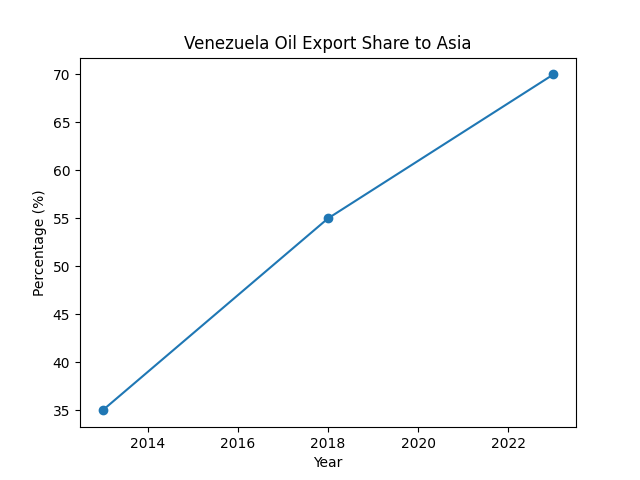
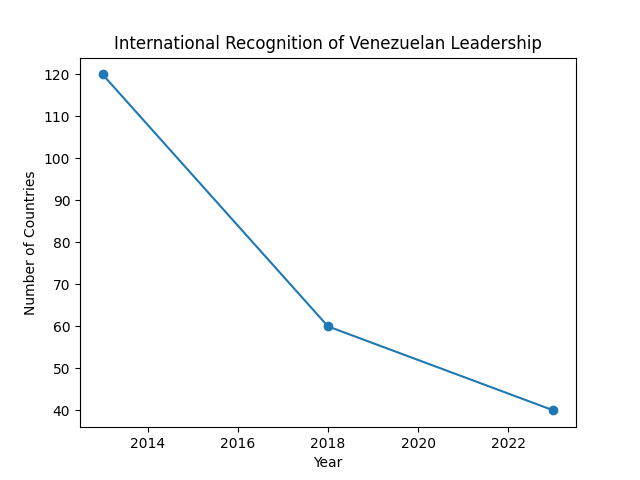
Data synthesized from the US Energy Information Administration, OPEC statistical bulletins, and United Nations reporting.
The data indicates a clear pattern: as legal and political pressure increased, Venezuela’s economic isolation deepened, while trade reoriented toward Asian markets. This shift reflects broader geopolitical fragmentation rather than an isolated national response.
Institutional and Global Perspectives
Multilateral institutions have generally avoided endorsing unilateral arrest efforts. The United Nations Office of the High Commissioner for Human Rights continues to document governance and human rights concerns while emphasizing due process and dialogue.
Academic research from policy institutions such as the London School of Economics highlights the risks of politicizing legal instruments. Their findings suggest accountability mechanisms are most effective when embedded in multilateral frameworks rather than bilateral pressure.
From a governance design perspective, these challenges mirror themes explored in Malota Studio’s review of AI governance and institutional accountability, where legitimacy and transparency are critical to long-term effectiveness.
What Policymakers and Analysts Should Monitor Next
Rather than offering definitive predictions, our assessment identifies several developments worth close monitoring:
- Multilateral engagement: Potential mediation or fact-finding initiatives by UN or regional bodies.
- Sanctions recalibration: Adjustments that balance enforcement objectives with humanitarian and economic considerations.
- Energy market signals: Changes in production agreements, export routing, or investment flows.
- Legal precedent setting: Court decisions that clarify or challenge existing immunity norms.
Together, these factors will influence not only the Venezuela case but also future disputes involving sovereignty and extraterritorial enforcement.
Data and Visualization Guidance for Policy Use
The dataset presented above is suitable for:
- Time-series visualization of oil production decline
- Comparative charts on diplomatic recognition trends
- Regional mapping of export realignment
Interpretation should remain neutral, emphasizing correlation and structural patterns rather than causation.
Resources and Further Reading
Internal – Malota Studio
- Modern Nuclear Energy: Risk, Safety, and Policy Trade-Offs
- AI Governance and Accountability in Global Systems
External – Authoritative Institutions
- International Court of Justice jurisdiction framework
- United Nations Security Council documentation
- US Energy Information Administration oil market data
- OPEC annual statistical bulletins
Author Bio
Written by the editorial team of Malota Studio, focusing on data-backed analysis and visual storytelling across science, technology, and public policy topics.