


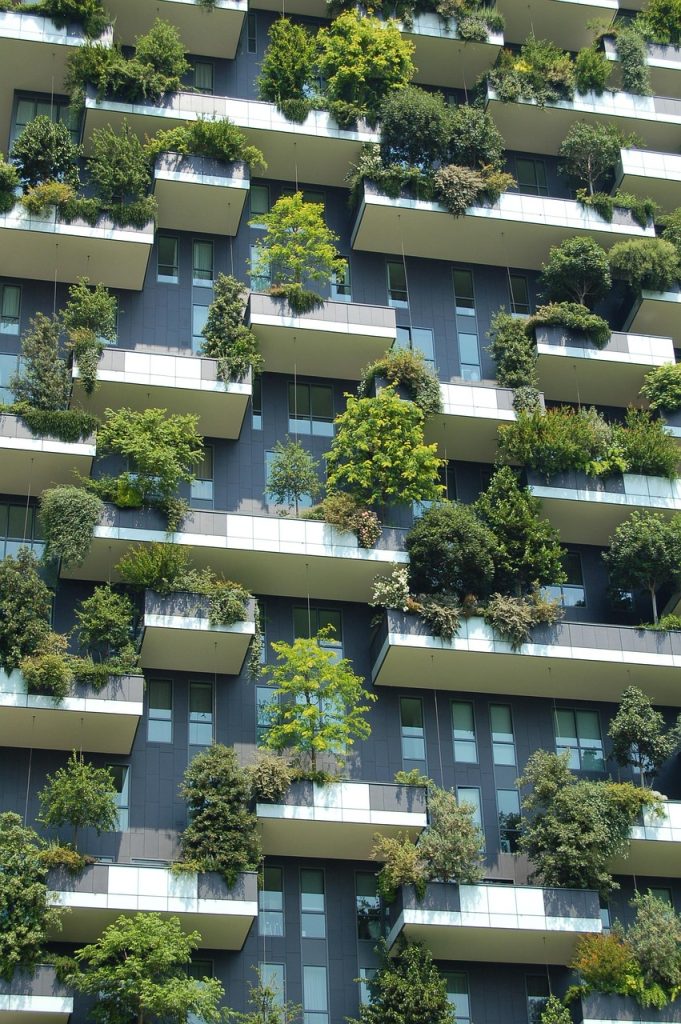
The green building movement has shifted from niche sustainability initiatives to a central consideration in global construction markets. In our analysis of industry data, policy developments, and market trends, we find that the adoption of sustainable construction practices has accelerated in many regions—driven by climate goals, regulatory frameworks, and corporate sustainability strategies—while debates over upfront cost premiums and long-term value persist.
What happened? Across the United States, Europe, Australia, and the UAE, construction stakeholders are increasingly incorporating green practices into new projects and retrofits. Energy-efficient design, water conservation systems, and sustainable materials are becoming more widespread, supported by green finance mechanisms and certification standards like LEED and other regional schemes. Despite this momentum, concerns about cost differentials and market readiness remain central to industry discourse.
Why does it matter? Buildings are responsible for a significant share of global energy use and carbon emissions. Sustainable design can reduce energy consumption by 25–50% and operational costs over a building’s life cycle, making green construction both an environmental imperative and a financial consideration for investors and policymakers. However, navigating the balance between sustainability benefits and cost challenges requires careful analysis of data, policy signals, and evolving market expectations.
Origins and Drivers of Sustainable Construction
The imperative for green building arises from the construction sector’s outsized environmental impact. Buildings and construction account for roughly 39% of global energy-related carbon emissions, with much of this tied to energy use during operation. This context has prompted international organizations—such as the United Nations Environment Programme and the U.S. Green Building Council—to promote efficiency standards and certification frameworks that reduce carbon, energy, water use, and waste throughout a building’s life cycle. usgbc.org+1
Historically, sustainable building practices were adopted most rapidly in high-income markets with strong policy incentives and technology adoption. In the past decade, certification systems like LEED, BREEAM (UK), and region-specific frameworks (e.g., Singapore’s Green Mark) have provided structured performance criteria. These influence everything from energy systems to material sourcing and indoor environmental quality, embedding sustainability into the industry’s technical lexicon and decision-making. usgbc.org
Researchers and professional bodies highlight that early design decisions—including passive design and energy modeling—can capture a large share of potential sustainability gains, reducing energy costs and carbon emissions significantly before construction is complete. arXiv
Construction Innovation Meets Market Dynamics
Across global markets, green building adoption is diversifying. While major urban centers in the U.S. and Europe have long led implementation, markets in the Middle East, Asia Pacific, and Australia show increasing uptake driven by governance commitments and investor appetite for sustainability-aligned assets. In regions like the UAE, national clean energy strategies and development benchmarks encourage construction firms to integrate energy-efficient systems and low-impact materials. Independent assessments of UAE cities suggest that sustainable construction is gaining momentum as part of broader sustainability goals. Reddit
Despite this progress, sector surveys signal regional variation in demand. For instance, a 2025 industry survey indicated a relative slowdown in demand for green office buildings in North and South America, attributed in part to shifting policy environments. Nonetheless, outside the Americas, demand remained stronger, illustrating how policy and regulatory direction materially influence market activity. The Guardian
Sustainability Outcomes and Performance Metrics
The environmental and operational benefits from green construction are documented across multiple studies and institutional data. Certified green buildings frequently demonstrate reductions in energy and water use, emissions, and operating costs compared with conventional structures:
| Performance Indicator | Typical Green Building Outcome |
|---|---|
| Energy Consumption | 25–50% reduction vs conventional buildings gitnux.org |
| Water Use | 30–40% lower than baseline levels ZipDo |
| Operational Cost Savings | 10–19% lower yearly operating costs boydwatterson.com |
| Property Value Increase | ~7–10% premium on asset value Webber Studio |
| Waste Diversion | Significant reductions in construction waste usgbc.org |
These outcomes are consequential for investors and asset managers, as energy and maintenance costs constitute a substantial portion of a building’s total lifecycle expenses. Moreover, adopting sustainable materials and system efficiencies can meaningfully reduce embodied carbon, aligning construction practices with broader climate targets. gitnux.org
The Cost Debate: Upfront Premiums vs Lifecycle Value
A central tension in the green building discourse is cost. Historically, sustainable construction incurred higher initial expenses due to advanced technologies—for example, energy-efficient HVAC systems or renewable integrations. Industry analyses typically show modest cost premiums relative to conventional construction:
- Upfront cost premiums often range between 2%–5% over comparable non-green projects. ZipDo
- In some market segments or climates, the premium can reach higher ranges (up to 10–12%), though such cases vary by region and design specifications. REsimpli
Importantly, operational savings tend to offset these premiums over time. Modeling conducted by professional bodies suggests that reduced energy and water use, longer equipment lifespans, and lower maintenance expenses contribute to rapid payback periods, often within a decade. Some comprehensive lifecycle cost studies find that financial benefits—including avoided utility costs and productivity benefits—outweigh additional upfront investment by an order of magnitude. wbdg.org
This evidence underscores how lifecycle value, rather than initial price tags, should guide procurement and investment decisions. For sophisticated stakeholders—such as institutional investors and public agencies—integrating whole-life cost analysis into project planning can align fiscal prudence with sustainability goals.
Institutional and Policy Perspectives
Global institutions and industry bodies play influential roles in shaping demand and standards for green building:
- The U.S. Green Building Council emphasizes that green building practices help reduce carbon emissions, improve human health outcomes, and deliver economic benefits—including increased asset value and operating cost savings. usgbc.org
- World Green Building Council reports and trends data point to expanding global interest in sustainability ratings and benchmarks, with many owners planning to pursue certification in future projects. ZipDo
Policy frameworks such as building performance standards, energy codes, and incentives (e.g., tax credits, green finance products) are shaping capital flows and corporate strategies. Transition to net-zero or low-carbon city goals also supports retrofit markets for existing buildings, highlighting the role of policy clarity in unlocking private investment.
Navigating the Outlook: Risks and Signals
Looking ahead, industry stakeholders should monitor several key dynamics:
- Policy evolution: Changes in national energy and building codes can accelerate or dampen demand for sustainable construction. For example, retroactive regulatory shifts have demonstrably affected market confidence in some regions. The Guardian
- Technology costs: Continued innovation and scale in sustainable materials, energy systems, and digital building management could further lower cost barriers.
- Financial frameworks: Expansion of green finance instruments—such as sustainability-linked loans and green bonds—may broaden access to capital for green construction projects.
Investors and policymakers should also consider workforce capacity and education, as advanced design and construction techniques require specialized expertise. Robust data collection and benchmarking mechanisms can support transparent performance evaluation.
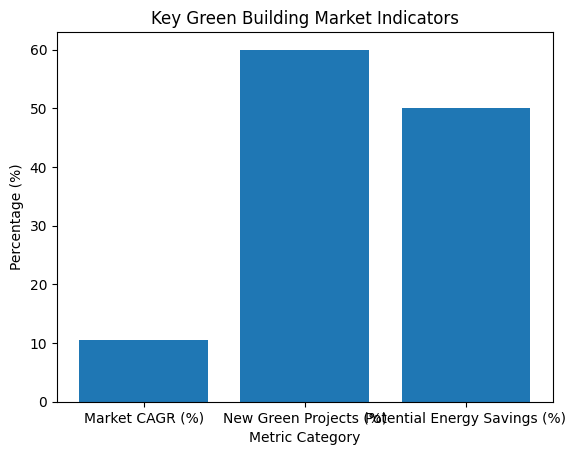
Data Signals and Visualization
| Metric Category | Indicative Range |
|---|---|
| Estimated green building market CAGR | ~10–11% through the late 2020s WifiTalents |
| Proportion of new green construction projects | ~60% of new builds integrating sustainability principles ZipDo |
| Potential energy savings | up to 50% reduced consumption WifiTalents |
Data interpretation must remain grounded in credible sources, with trending visualization enabling stakeholders to assess progress toward decarbonization and cost optimization goals.
Authoritative Resources
For further context and data supporting green building analysis, see:
- U.S. Green Building Council insights on green building benefits via USGBC Benefits of Green Building usgbc.org
- Global trends in sustainable construction available in World Green Building Trends SmartMarket Report globalgbc.org
- Green building market statistics and energy savings summaries at Green Building Statistics Reports 2025 gitnux.org
Internal context on related construction and sustainability topics can be integrated with relevant insights from Malota Studio’s editorial analysis library.
Author Bio:
Written by the editorial team of Malota Studio, focusing on data-backed analysis and visual storytelling across science, technology, and public policy topics.
