


The world of battery technology is experiencing a revolution that’s reshaping how we power our lives. From the electric vehicles cruising our streets to the massive energy storage systems backing up renewable power grids, batteries have become the silent heroes of our transition to a sustainable future. What once seemed like distant science fiction is now becoming everyday reality, and the pace of innovation shows no signs of slowing down.
Why Battery Innovation Matters More Than Ever
Think about your daily life for a moment. Your smartphone, your laptop, perhaps your electric car, the solar panels on your neighbor’s roof storing energy for nighttime use. All of these depend on battery technology. But here’s the thing: the batteries we’ve relied on for years are reaching their limits, and that’s where the excitement begins.
Traditional lithium-ion batteries have served us well, but they come with real challenges. They’re expensive, which makes electric vehicles cost more than many people can afford. They take a long time to charge, leading to that familiar “range anxiety” among EV drivers. They can overheat and, in rare cases, catch fire. And their energy density limits how far a vehicle can travel on a single charge.
The good news? Scientists, engineers, and companies around the world are tackling these problems head-on, and they’re making remarkable progress.
The Numbers Tell a Compelling Story
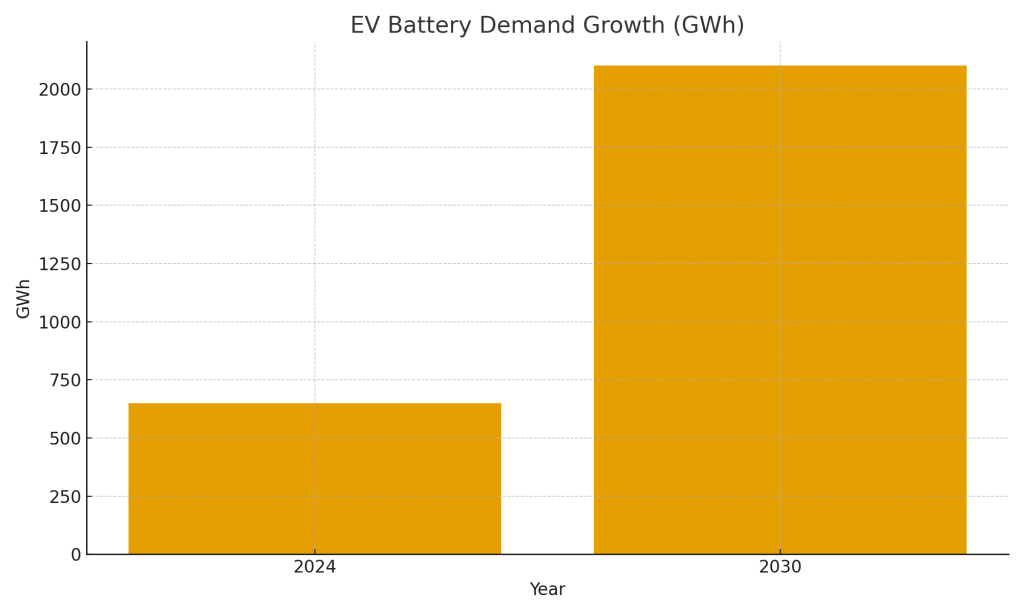
The battery industry isn’t just growing—it’s exploding. Consider these eye-opening figures: global EV battery demand is projected to jump from 650 gigawatt-hours in 2024 to more than 2,100 gigawatt-hours by 2030. That’s more than a threefold increase in just six years.
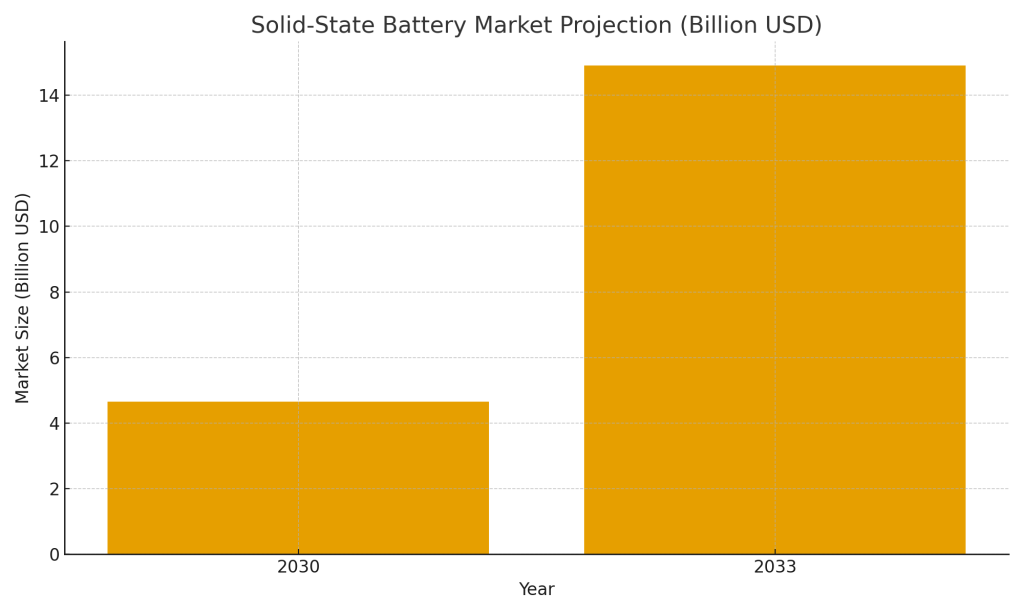
Meanwhile, the cost of lithium-ion battery packs has plummeted to around $120 per kilowatt-hour, making electric vehicles increasingly competitive with traditional cars. And the emerging solid-state battery market, which barely existed a few years ago, is expected to reach between $4.6 billion and $14.9 billion by 2030-2033.
These aren’t just numbers on a spreadsheet. They represent a fundamental shift in how we generate, store, and use energy. They signal that the infrastructure for a cleaner, more electrified world is being built right now, at a pace that would have seemed impossible just a decade ago.
Solid-State Batteries: The Game-Changer Everyone’s Watching
If there’s one technology that has the battery industry buzzing with excitement, it’s solid-state batteries. Imagine a battery that’s safer, more powerful, and charges faster than anything currently on the market. That’s the promise of solid-state technology, and it’s closer to reality than most people realize.
What Makes Solid-State Different?
The key difference is right there in the name: solid. Traditional lithium-ion batteries use a liquid electrolyte to move ions between the battery’s positive and negative electrodes. Solid-state batteries replace that liquid with a solid material, and that seemingly simple change unlocks a cascade of benefits.
First, there’s safety. Liquid electrolytes can leak and are flammable, which is why you occasionally hear news stories about battery fires. Solid electrolytes are much more stable and far less likely to catch fire, even under extreme conditions. For anyone who’s ever worried about their laptop overheating or heard about an EV fire, this is a big deal.
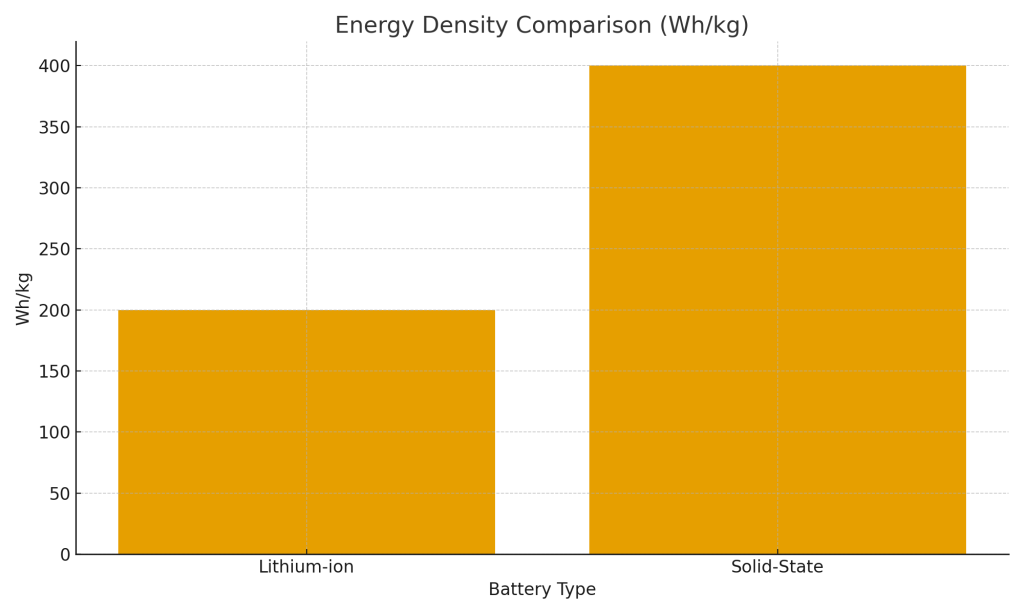
Second, there’s energy density. Solid-state batteries can pack significantly more energy into the same space. While conventional lithium-ion batteries typically offer around 150 to 250 watt-hours per kilogram, solid-state batteries can reach 250 to 500 watt-hours per kilogram or even higher. What does that mean in practical terms? Electric vehicles that can travel twice as far on a single charge, or the same range in a much lighter, more efficient vehicle.
Third, charging speed. Solid-state batteries can handle much faster charging rates without degrading, potentially cutting charging times from hours to minutes. Imagine pulling into a charging station and getting enough range for your entire week’s commute in the time it takes to grab a coffee.
From Lab to Road: The Commercial Reality
Here’s where things get really interesting. Solid-state batteries aren’t just theoretical anymore. Major automakers are betting billions on bringing them to market, and their timelines are surprisingly aggressive.
Toyota, one of the world’s largest automakers, has announced plans to launch electric vehicles with solid-state batteries by 2027 or 2028. That’s not some vague “someday” promise—it’s a concrete commitment just a few years away.
Stellantis, the automotive giant behind brands like Jeep, Dodge, and Peugeot, has already validated solid-state cells and plans to test them in actual vehicle fleets by 2026. BMW has partnered with Solid Power to develop the technology, while numerous other automakers are pursuing similar partnerships and in-house development programs.
This wave of industry commitment tells us something important: the technical challenges that once made solid-state batteries seem like a pipe dream are being solved. The question is no longer “if” but “when.”
The Cost Challenge
Of course, there’s a catch. There always is with emerging technology. Right now, early solid-state batteries cost around $800 or more per kilowatt-hour, compared to about $137 for conventional lithium-ion. That’s a massive price gap, and it’s the main reason you can’t buy a solid-state powered EV today.
But history offers reasons for optimism. Remember when flat-screen TVs cost $10,000? Or when the first smartphones were luxury items? As production scales up and manufacturing processes improve, costs invariably come down. Most experts expect solid-state battery costs to fall dramatically over the next decade as production moves from pilot lines to mass manufacturing.
Fast-Charging: Eliminating the Range Anxiety Problem
While solid-state batteries work their way toward mass production, another set of innovations is addressing one of the biggest psychological barriers to EV adoption: charging time.
The Five-Minute Fill-Up
Chinese battery giant CATL has developed technology that can add over 323 miles (520 kilometers) of range in just five minutes of charging. Read that again: five minutes. That’s approaching the convenience of filling up a gas tank, and it completely changes the equation for potential EV buyers.
Other companies are pursuing similar goals. Some next-generation battery designs promise to add 300 miles or more in approximately five minutes, turning charging from a lengthy interruption into a quick pit stop.
The impact of this technology extends beyond personal convenience. It makes electric vehicles viable for commercial fleets, long-haul trucking, and other applications where time is money and extended charging breaks aren’t practical.
Silicon Anodes: More Power in Less Space
Another innovation that deserves attention is the shift from graphite to silicon in battery anodes (the negative electrode). This might sound like technical minutiae, but it has profound implications.
Silicon can store dramatically more lithium ions than graphite, potentially increasing energy density by up to 50 percent. That means a battery the same size as today’s models could power a vehicle much farther, or you could have a smaller, lighter battery with the same range. Either way, it’s a win for efficiency and performance.
Several companies are already commercializing silicon-anode technology, and it’s being integrated into current battery designs rather than requiring entirely new infrastructure. This makes it a near-term solution rather than a distant promise.
Battery Swapping: A Different Approach
While most of the Western world focuses on faster charging, China has pioneered another solution: battery swapping. Instead of waiting for your battery to charge, you simply drive into a station where robots remove your depleted battery and install a fully charged one in about 100 seconds.
CATL and several Chinese automakers have built networks of these swapping stations, creating an entirely different model for electric mobility. While this approach requires standardization and significant infrastructure investment, it completely eliminates charging time as a concern.
Whether battery swapping catches on globally remains to be seen, but it demonstrates that multiple solutions can coexist, each serving different needs and preferences.
The Global Market: Following the Money
To understand where battery technology is headed, it helps to follow the money. The investment flowing into this sector is staggering and tells us where industry leaders see the future going.
Investment Highlights
Samsung SDI recently signed a $1.36 billion contract to supply lithium iron phosphate (LFP) batteries for U.S. energy storage systems. That’s a massive commitment to grid-scale storage, underscoring how batteries are becoming critical infrastructure for renewable energy integration.
Meanwhile, startups are attracting serious venture capital. Blue Current, a company developing next-generation silicon solid-state batteries, raised $81 million with backing from Amazon. When tech giants invest in battery technology, they’re betting on it being central to their future business models.
These investments span the entire value chain, from raw material processing to cell manufacturing to pack assembly and recycling. The ecosystem is maturing rapidly, with each segment attracting both established players and innovative newcomers.
Market Projections Paint an Optimistic Picture
The solid-state battery market alone is expected to grow at a compound annual growth rate of between 17 and 31 percent, depending on which analysis you consult. That’s explosive growth by any standard, comparable to the early days of smartphones or social media.
Overall EV battery production capacity is set to more than triple between 2024 and 2030, rising from 650 gigawatt-hours to over 2,100 gigawatt-hours. This expansion requires enormous capital investment in manufacturing facilities, equipment, and workforce development.
What’s particularly interesting is the geographic distribution of this growth. While China has dominated battery manufacturing for years, new investments in the United States, Europe, and other regions are diversifying the supply chain. This shift reflects both national security concerns and the desire to capture economic value from the EV transition.
Real-World Applications: Beyond Electric Vehicles
While electric vehicles grab most of the headlines, battery innovation is transforming numerous other sectors.
Grid-Scale Energy Storage
As solar and wind power become cheaper and more prevalent, the need for grid-scale energy storage grows. Renewable energy is intermittent—the sun doesn’t always shine, and the wind doesn’t always blow—so storing excess energy for use during low-generation periods is crucial.
Large battery installations are increasingly replacing natural gas “peaker” plants that traditionally handled demand spikes. These battery systems can respond to grid needs in milliseconds, providing stability and reliability that was once impossible without fossil fuels.
Consumer Electronics
Your next laptop or smartphone will likely benefit from these battery advances too. Higher energy density means longer battery life or thinner, lighter devices. Improved safety means less worry about overheating. Faster charging means less time tethered to an outlet.
While consumer electronics batteries are much smaller than those in vehicles, they often serve as proving grounds for new technologies before they scale up to automotive applications.
Aviation and Marine Applications
Electric aircraft and ships represent the next frontier for battery technology. These applications demand even higher energy density than cars because weight is even more critical. While commercial electric aviation is still years away, research in this area is pushing battery performance to new levels that will benefit all applications.
The Challenges We Still Face
Despite all this progress, significant obstacles remain. Being honest about these challenges is important for setting realistic expectations.
Manufacturing Scale and Cost
Moving from lab prototypes to mass production is notoriously difficult. Many promising battery technologies have stumbled at this stage. Building gigafactories requires billions of dollars, years of time, and solving countless engineering problems that only reveal themselves at scale.
The cost challenge is particularly acute for solid-state batteries. While experts expect prices to fall, that decline isn’t guaranteed, and it depends on solving complex manufacturing problems. If production costs remain stubbornly high, solid-state technology might remain confined to niche applications rather than replacing lithium-ion across the board.
Raw Material Constraints
Batteries require various minerals—lithium, cobalt, nickel, manganese, and others. Global supply chains for these materials face numerous challenges, from geopolitical tensions to environmental concerns about mining practices to simple questions of whether there’s enough economically recoverable material to meet projected demand.
Cobalt is particularly problematic. Much of the world’s supply comes from the Democratic Republic of Congo, where mining conditions have raised human rights concerns. The industry is actively working to reduce or eliminate cobalt from battery chemistries, but this requires technical tradeoffs.
Lithium supply has been volatile, with prices swinging wildly based on market expectations. While the earth has plenty of lithium, expanding production takes time, and periods of shortage can slow EV adoption.
Recycling and End-of-Life Management
As millions of electric vehicles hit the roads, what happens to their batteries when the vehicles are retired? Battery recycling is still in its early stages, though it’s improving rapidly.
Effective recycling could ease raw material constraints while addressing environmental concerns. But building a comprehensive recycling infrastructure requires coordination between automakers, battery manufacturers, recycling companies, and regulators. Many countries are still developing the policies and facilities needed for large-scale battery recycling.
Technical Limitations
Even with all the innovations discussed here, batteries still have limitations compared to fossil fuels. Gasoline contains far more energy per kilogram than any battery, which is why long-range aviation and heavy shipping will likely be among the last sectors to electrify.
Cold weather reduces battery performance, which is a real concern for people living in northern climates. Batteries degrade over time, losing capacity with each charge cycle, though newer chemistries are much better at maintaining performance.
These limitations don’t make batteries unsuitable for their intended applications, but they do mean we need to be realistic about what battery technology can and can’t do, at least in the near term.
Looking Ahead: The Next Decade of Innovation
So where does all this lead? What should we expect over the next five to ten years?
Near-Term Expectations (2025-2027)
In the immediate future, expect continued incremental improvements to lithium-ion technology. Batteries will get slightly cheaper, slightly denser, and slightly faster to charge each year. These small improvements add up, making electric vehicles increasingly competitive with traditional cars.
We’ll see the first commercial solid-state batteries enter the market, likely in premium vehicles or limited production runs. These early models will be expensive, but they’ll prove the technology works in real-world conditions and pave the way for broader adoption.
Battery swapping infrastructure will expand in markets where it makes sense, particularly in China and potentially in commercial fleet applications elsewhere.
Medium-Term Outlook (2027-2030)
This is when solid-state technology should really start to scale. If current plans hold, several major automakers will offer solid-state vehicles by the end of this period, and production volumes should be increasing rapidly.
Battery costs should continue falling, with lithium-ion potentially dropping below $100 per kilowatt-hour and solid-state prices beginning their downward trajectory as manufacturing scales up.
The used EV market will mature, with better understanding of battery longevity and more established protocols for testing, refurbishing, and recycling batteries. This will help reduce total ownership costs and make EVs accessible to more buyers.
Long-Term Vision (2030 and Beyond)
By the early 2030s, electric vehicles should achieve true cost parity with gasoline cars on a purchase price basis, not just over the lifetime of ownership. This could trigger a rapid acceleration in adoption, potentially making EVs the dominant form of new car sales in major markets.
Grid-scale storage should be widespread, enabling very high penetrations of renewable energy without reliability concerns. Some analysts predict that renewables plus storage will be the cheapest form of new electricity generation nearly everywhere.
New battery chemistries beyond solid-state—perhaps lithium-sulfur, sodium-ion for specific applications, or technologies we haven’t yet imagined—will begin entering the market, pushing performance even further.
What This Means for You
All these technical details and market projections ultimately come down to how they affect real people’s lives. Here’s what you might expect:
If you’re considering an electric vehicle, the value proposition will keep improving. Prices will fall, range will increase, and charging will get faster and more convenient. The “right time” to buy an EV depends on your individual circumstances, but the technology and infrastructure are improving rapidly.
If you’re thinking about solar panels for your home, battery storage is becoming more affordable and capable. The ability to store solar energy for use at night or during power outages adds significant value and resilience.
If you’re concerned about climate change, battery innovation is one of the most important enablers of decarbonization. Cleaner transportation and renewable energy integration both depend heavily on better, cheaper batteries.
The Bottom Line
Battery technology is undergoing a transformation that will reshape energy, transportation, and numerous other sectors over the coming decades. Solid-state batteries promise safer, denser, faster-charging energy storage. Incremental improvements to existing lithium-ion technology continue to drive down costs and improve performance. New approaches like silicon anodes and battery swapping offer alternative paths to solving different problems.
Significant challenges remain, from manufacturing scale to raw material supply to recycling infrastructure. These aren’t trivial obstacles, and overcoming them will require sustained effort, investment, and innovation.
But the trajectory is clear. Batteries are getting better, cheaper, and more capable at a remarkable pace. The investments being made, the technologies being commercialized, and the commitments from major companies all point toward a future where battery limitations become less constraining and the benefits more accessible.
We’re witnessing a genuine technological revolution, one that will affect virtually everyone on the planet. The batteries powering your great-grandchildren’s world will be as different from today’s as modern smartphones are from the brick phones of the 1980s.
That future is being built right now, one innovation at a time, and it’s closer than most people realize.
Credible Resources & Further Reading
🔗 Battery Industry Statistics — ZipDo ZipDo
🔗 Battery Industry Statistics 2024 — Strategic Market Research Strategic Market Research
🔗 Toyota solid-state EV plans — LiveScience Live Science
🔗 Samsung SDI LFP battery deal — Reuters Reuters
