



Introduction
A structured consulting white paper strategy is no longer just a marketing exercise. In enterprise environments, it functions as an influence system that supports strategic positioning, complex sales cycles, regulatory communication, and executive credibility.
The scale of opportunity is significant. According to Statista, global B2B e-commerce transactions are projected to reach over $20 trillion by 2027, reflecting the growing complexity of enterprise buying environments (https://www.statista.com/statistics/617033/b2b-e-commerce-market-size-worldwide/). At the same time, the 2023 LinkedIn–Edelman B2B Thought Leadership Impact Report found that 52% of decision-makers say high-quality thought leadership has directly led them to award business to an organization.
In this context, a professional services white paper is not a downloadable PDF. It is a governance-aligned, data-backed document designed to influence multiple stakeholders simultaneously. When properly structured, it strengthens enterprise trust and shortens decision cycles in complex buying committees.
Business Context and Industry Background
Enterprise organizations operate within highly structured ecosystems. Decisions involving digital transformation, ESG compliance, AI adoption, or infrastructure modernization often require alignment across executive leadership, procurement, risk management, IT architecture, and sustainability teams.
According to Deloitte’s Global Marketing Trends report, 73% of high-growth brands focus on building trust through transparent and evidence-based communication (https://www2.deloitte.com/us/en/insights/topics/marketing-and-sales-operations/global-marketing-trends.html). White papers are one of the few formats that can systematically present methodology, benchmarks, and implementation frameworks in a board-ready format.
In consulting-intensive sectors such as financial services, energy, and technology, white papers also serve as a formal extension of consulting thought leadership content. They articulate:
- Strategic roadmaps
- Operational models
- Regulatory alignment
- Cost-benefit analyses
- Risk mitigation frameworks
Furthermore, Boston Consulting Group estimates that digitally mature companies generate up to 1.8 times higher earnings growth compared to digital laggards. This kind of data becomes far more persuasive when embedded into a consulting report strategy that connects insight to enterprise performance metrics.
In short, white papers are part of enterprise knowledge infrastructure.
Key Challenges Companies Face
Executive Skepticism Toward Marketing-Led Content
Enterprise executives are increasingly selective about the content they trust. The LinkedIn–Edelman study indicates that 71% of decision-makers say less than half of the thought leadership they read provides valuable insights.
If white papers lack original analysis or credible references, they risk being dismissed before reaching procurement or technical stakeholders.
Fragmented Data Sources
Large organizations often operate across regions, business units, and regulatory jurisdictions. Data inconsistencies undermine credibility.
In regulated sectors, inaccurate claims can create compliance exposure. For example, sustainability-related claims must align with frameworks such as the Task Force on Climate-related Financial Disclosures. Misalignment can delay publication cycles by weeks due to additional legal reviews.
Long Production Cycles
Enterprise white papers frequently involve multiple review layers: subject matter experts, legal, compliance, brand, and executive sponsors.
Without structured governance, production timelines can extend beyond three months. This reduces agility, particularly in fast-moving sectors such as AI or cybersecurity.
Lack of Measurable Influence Tracking
Consulting content marketing in enterprise contexts is rarely measured by downloads alone. Buying groups now average six to ten stakeholders in complex B2B decisions, according to Gartner.
Without influence metrics—such as deal acceleration rates or executive engagement depth—white papers remain underutilized assets.
Best Practices and Professional Approaches
Align Consulting White Paper Strategy With Strategic Priorities
The most effective consulting white paper strategy begins with enterprise priorities.
Instead of producing generic industry commentary, leading organizations anchor white papers to transformation themes such as:
- Cloud migration roadmaps
- ESG transition strategies
- Data governance modernization
- AI risk frameworks
This alignment ensures relevance at executive and board levels.
Integrate Quantitative Benchmarks
White papers that include benchmark data are significantly more persuasive.
For example, the World Economic Forum reports that digital transformation could unlock over $100 trillion in value for business and society over the next decade. When such macro-level data is combined with internal case metrics—such as cost reductions of 15–25% after automation—the narrative becomes actionable rather than theoretical.
Below is an example of structured benchmark data suitable for enterprise visualization.
Table: Enterprise Drivers for Thought Leadership Consumption
Source: LinkedIn–Edelman B2B Thought Leadership Impact Report
| Driver of Engagement | Percentage of Decision-Makers |
|---|---|
| Seeking innovative insights | 65% |
| Evaluating vendor capabilities | 60% |
| Understanding industry trends | 58% |
| Assessing organizational expertise | 54% |
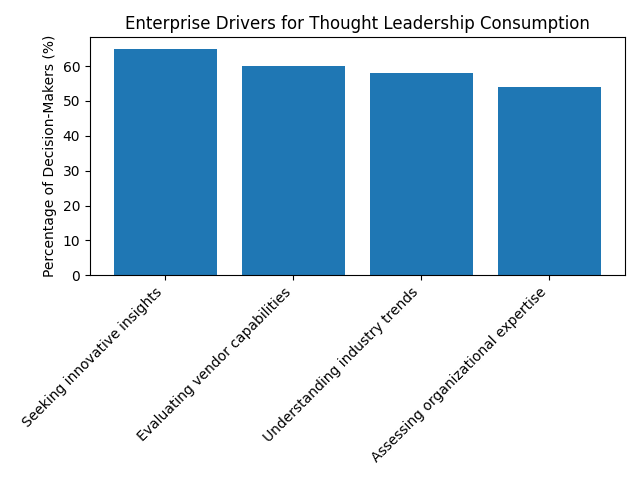
This type of data table can be translated into dashboards, internal presentations, or campaign performance reviews.
Establish Editorial Governance
Mature organizations treat white papers as controlled documents.
Governance typically includes:
- Defined review workflows
- Version control protocols
- Legal and compliance validation
- Data source verification
Companies that formalize these processes often reduce revision cycles and improve cross-functional collaboration.
Connect White Papers to Broader Consulting Report Strategy
White papers should not operate in isolation. They are most effective when connected to:
- Annual reports
- ESG disclosures
- Investor communications
- Industry conference presentations
This integrated approach enhances consistency and ensures that consulting thought leadership content reinforces enterprise narratives across channels.
Data, Reporting, and Documentation Perspective
From a reporting standpoint, enterprise white papers must integrate into performance systems.
High-performing marketing and communications teams increasingly track influence indicators such as:
- Engagement from C-suite readers
- Multi-touch attribution in CRM systems
- Pipeline acceleration for complex deals
- Cross-regional adoption of frameworks
According to HubSpot’s State of Marketing Report, organizations that document their content strategy are significantly more likely to report success compared to those without formal documentation (https://www.hubspot.com/state-of-marketing).
In enterprise environments, documentation standards also support risk management. Metadata tagging, structured citations, and transparent methodology statements allow white papers to withstand regulatory or investor scrutiny.
Review cycles are often quarterly or biannual, particularly when data relates to evolving regulations or market forecasts. This ensures ongoing relevance and reduces reputational exposure.
Common mistakes to avoid
Treating White Papers as Campaign Assets Only
When white papers are developed solely for short-term lead generation, they fail to serve strategic functions. This limits long-term ROI and reduces executive visibility.
Overlooking Regulatory Implications
In industries subject to disclosure requirements, unsupported claims can trigger compliance reviews. Delays of several weeks are common when legal teams must revalidate data.
Neglecting Cross-Functional Input
Excluding IT, sustainability, or risk teams often results in partial analysis. This weakens credibility and may require substantial revisions before publication.
Failing to Update Data Regularly
Enterprise decisions rely on current information. Outdated benchmarks reduce trust and may undermine procurement discussions, especially in fast-evolving sectors like cybersecurity or AI.
Conclusion
In complex B2B environments, a consulting white paper strategy functions as a structured influence mechanism rather than a marketing artifact. It aligns executive priorities, integrates credible data, and supports cross-functional decision-making.
With more than half of enterprise decision-makers indicating that strong thought leadership directly influences vendor selection, the strategic importance of disciplined white paper development is measurable and material.
For enterprise organizations seeking authority, governance alignment, and measurable influence, investing in a robust consulting white paper strategy is not optional. It is a foundational component of modern consulting report strategy and long-term institutional credibility.
References
- Statista – Global B2B E-commerce Market Size
https://www.statista.com/statistics/617033/b2b-e-commerce-market-size-worldwide/ - LinkedIn–Edelman B2B Thought Leadership Impact Report
https://business.linkedin.com/marketing-solutions/blog/linkedin-news/2023/b2b-thought-leadership-impact-report - Deloitte Global Marketing Trends
https://www2.deloitte.com/us/en/insights/topics/marketing-and-sales-operations/global-marketing-trends.html - HubSpot State of Marketing Report
https://www.hubspot.com/state-of-marketing - World Economic Forum – Digital Transformation Value
https://www.weforum.org/agenda/archive/digital-transformation/